Running a business means making decisions without always knowing what comes next. A trusted mentor can give you room to talk through those decisions, spot questions you may have missed, and connect you with people who have the expertise you need.
In Episode 02 of The Future Is Local, Anne Kirby talks with Jerry Glenn of Cultivate Lancaster about how mentorship works in practice, from finding a mentor and building trust to knowing when it is time to bring another expert into the conversation. Jerry has mentored Anne for more than 12 years.
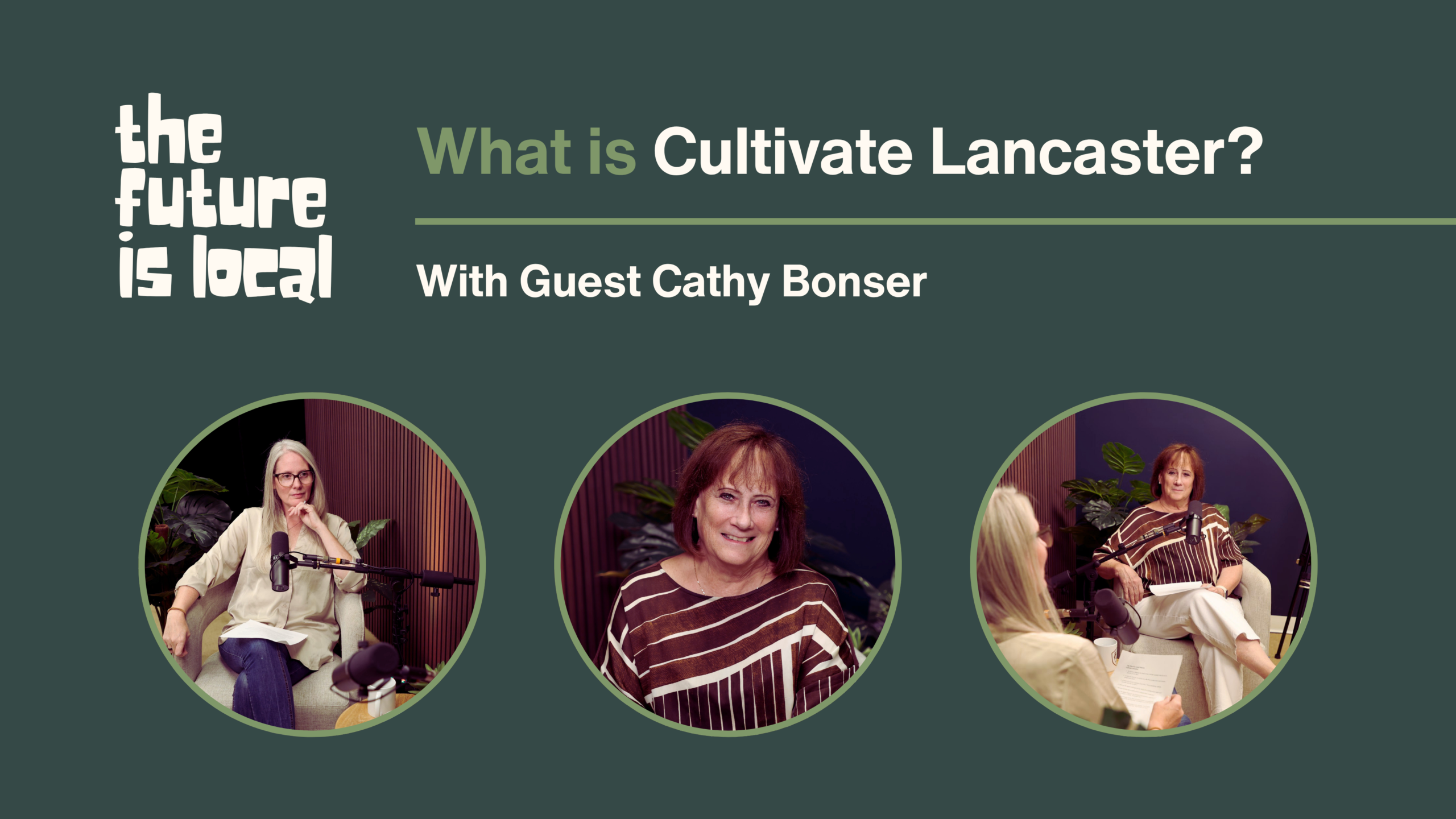
Episode 02 · Anne Kirby talks with Jerry Glenn of Cultivate Lancaster about finding a mentor, building trust, and knowing when to bring another expert into the conversation. (24 min)
A mentor gives you room to think out loud
Entrepreneurs may have employees, family, and friends around them, but that does not always mean they have someone they can talk to openly about the business and where it is headed. A mentor can be a sounding board: someone outside the day to day who listens, asks questions, and helps an entrepreneur think through what they want to do next.
That outside perspective can be especially helpful when you are deep in the weeds. A mentor might challenge an assumption, help you see another way forward, or make space to talk through a decision before you act.
A good mentor asks questions and knows where to find answers
A mentor does not need to have every answer. Jerry says a good mentor asks questions and helps the entrepreneur find the right expertise.
Jerry’s own background is in executive leadership, sales, and marketing. When a client needs help outside that, he looks for the right person or organization to bring into the conversation. That might be:
- An attorney, for entity setup, contracts, or leases
- A bookkeeper or accountant, for financials and tax questions
- An HR professional, once there are employees to hire and manage
- Another specialist, depending on the industry and the question
An entrepreneur can have a promising idea and still need help with bookkeeping, legal setup, or planning. Finding the right support early can make a real difference.
Sometimes the support comes from a whole circle
At Cultivate Lancaster, mentorship can involve more than one person. Jerry describes co-mentoring and connecting clients with other organizations when their needs call for different expertise.
In the episode, he points to several places Lancaster entrepreneurs can turn:
- ASSETS, for business training and lending
- FINANTA, for small business lending
- SCORE, for volunteer business mentoring
- Local chambers of commerce, for connections and member programs
- Pennsylvania Business One-Stop Shop, for registration and licensing
The right connection depends on the question at hand, and a mentor can help an entrepreneur find their way through the wider network.
Respect and follow-through help mentorship work
A strong mentoring relationship takes trust and respect. It also takes action. Jerry may ask a client to take a next step or work on a specific part of the business. If the entrepreneur does not see value in following through, the relationship can lose momentum.
Some mentoring relationships last a few meetings. Others continue for years. Anne and Jerry have worked together for more than a decade.
You can ask for help before you have everything figured out
You do not need a finished plan to ask for help.
If you are looking for a mentor, you do not need to wait until you have a polished plan or a fully operating business. Jerry says Cultivate Lancaster’s mentoring is free. To get started, fill out the short form on the Cultivate Lancaster website. The team will work to match you with a mentor and set up a first meeting.
Jerry also encourages entrepreneurs to make time for in-person conversations when possible. Virtual meetings are convenient, but he believes there is no substitute for sitting down face to face.
Make a plan, and start with a few pages
Jerry encourages entrepreneurs to have a plan. That does not have to mean a long, formal document. A short business plan can answer four questions:
- Where are you now?
- What are you doing?
- Where do you want to go?
- How might you get there?
The important thing is to start. You can build on the plan as the business develops and seek out workshops or other resources when you are ready to go deeper.
A mentor can guide you, but you need to do the work
One thing entrepreneurs should not expect a mentor to do is run the business for them. A mentor can offer advice, feedback, and connections. They can help you work through a business plan or think about your options.
Mentorship also offers a different kind of space from a peer group. Both can be valuable, but a mentor may be someone you can speak with privately about sensitive business questions.
Mentorship changes with the business
There is no one schedule that works for every entrepreneur. The rhythm depends on what the business needs:
- Newer business owners often meet with Jerry every three or four weeks
- Established businesses he has worked with for a long time may meet every six or eight weeks
- Some meet less often than that, depending on what is going on
The point is to find a rhythm that gives you useful support. As your business changes, the kind of help you need, and how often you need it, may change too.
Lancaster’s opportunity is connection
Jerry has lived in 15 different cities, and he says he has not seen another place with as many organizations focused on helping entrepreneurs as Lancaster. That network includes mentors, lenders, business programs, and community organizations.
His advice is simple: reach out.
Entrepreneurs who connect with organizations that can help may give themselves a better chance at success. And if you are not sure where to start, a conversation with a mentor can help you identify the next question and the right resource.
What The Future Is Local is about
Lancaster has people and organizations ready to help entrepreneurs. The opportunity is making those connections easier to find and use. Through The Future Is Local, we are listening to business owners, learning about the resources already here, and exploring where stronger connections could help.
We are just getting started.

About the guest
Jerry Glenn
Business Mentor, Cultivate Lancaster
Jerry Glenn is a mentor with Cultivate Lancaster. He spent much of his career with Armstrong, working in cities around the world, and brings experience in executive leadership, sales, and marketing. After retiring, Jerry began mentoring entrepreneurs, inspired in part by his father, who mentored young business owners for many years.
Join in
Ready to talk through your business idea?
Cultivate Lancaster will match you with a mentor at no cost. And if you know about a resource more Lancaster entrepreneurs should hear about, tell us.
The future is local. Let’s build it together.

0 Comments